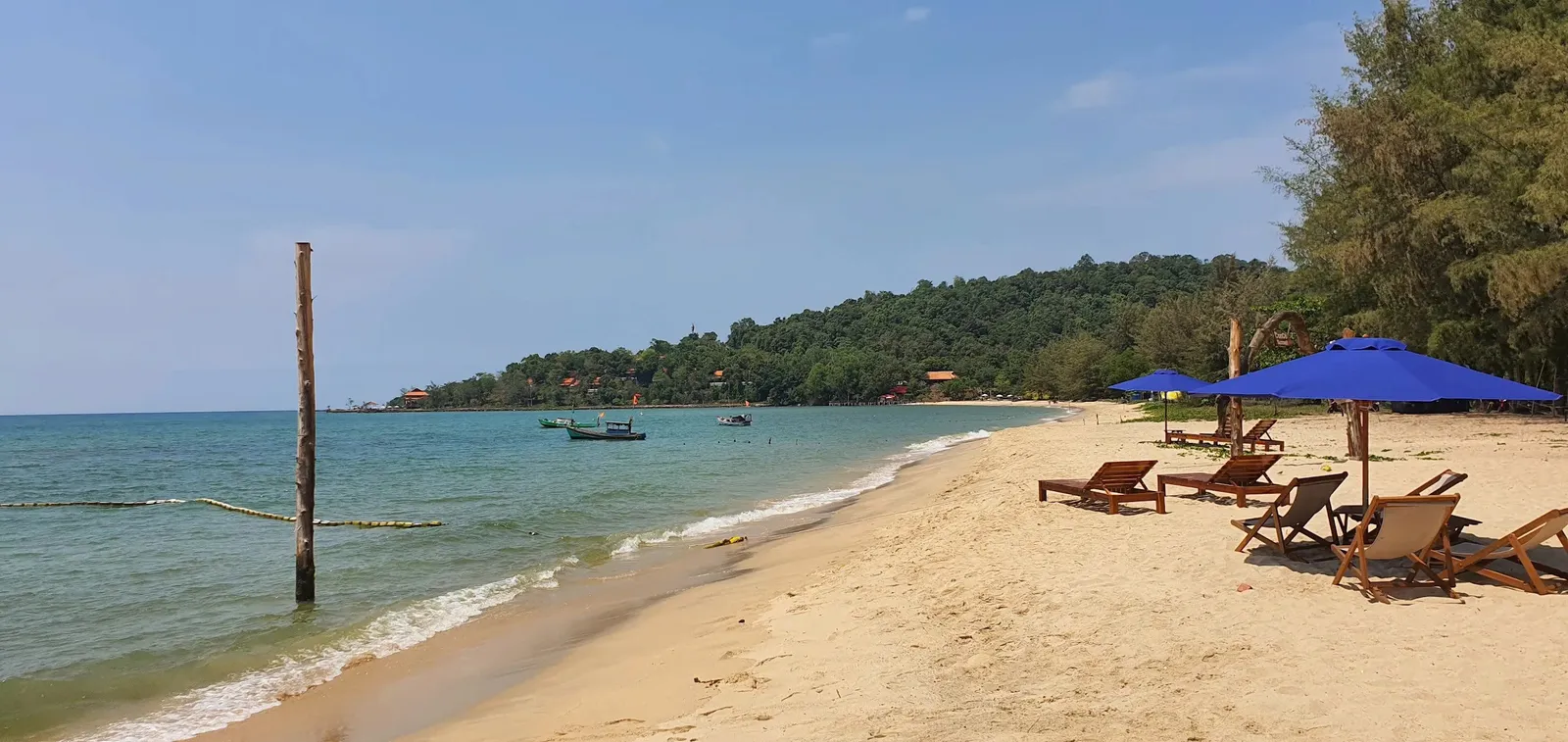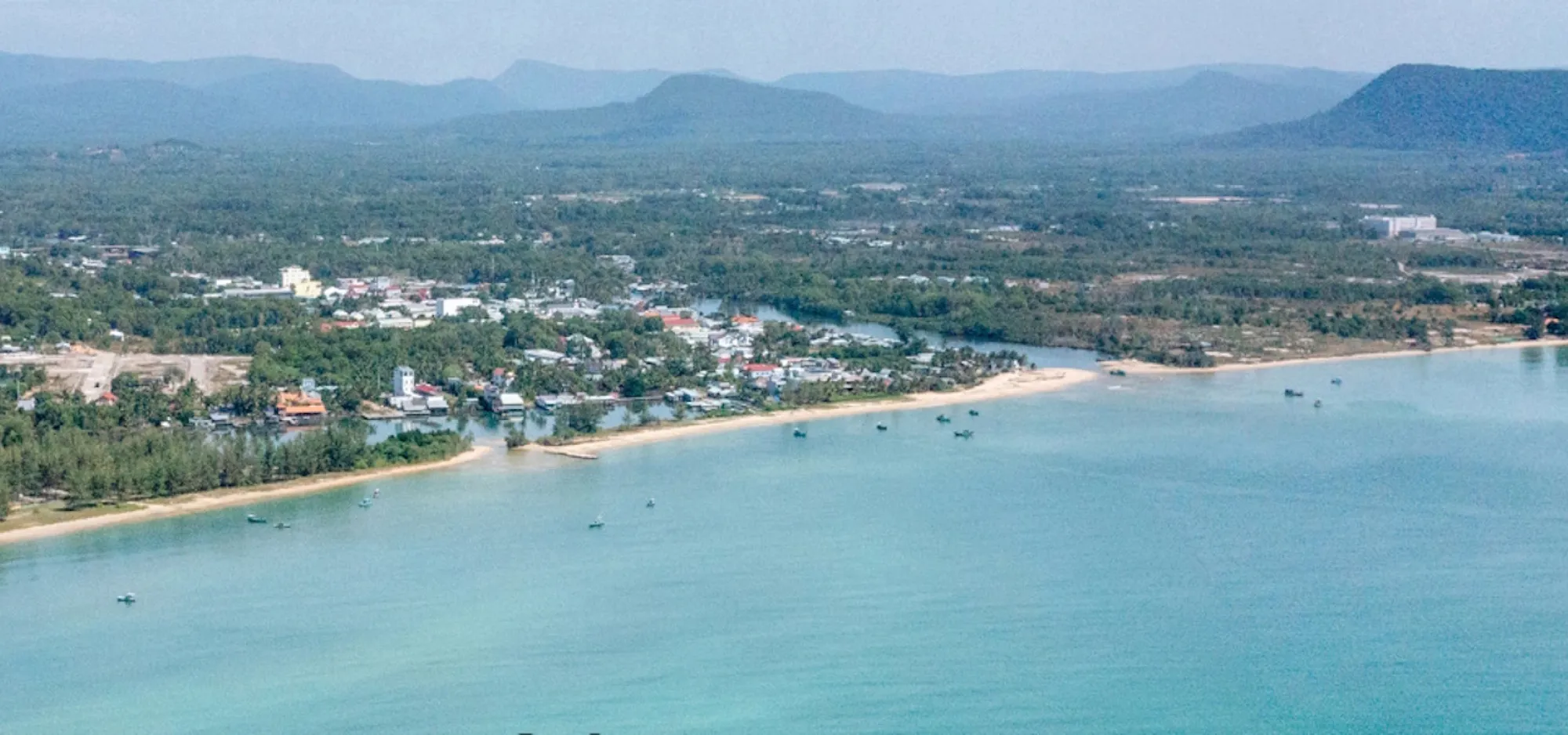
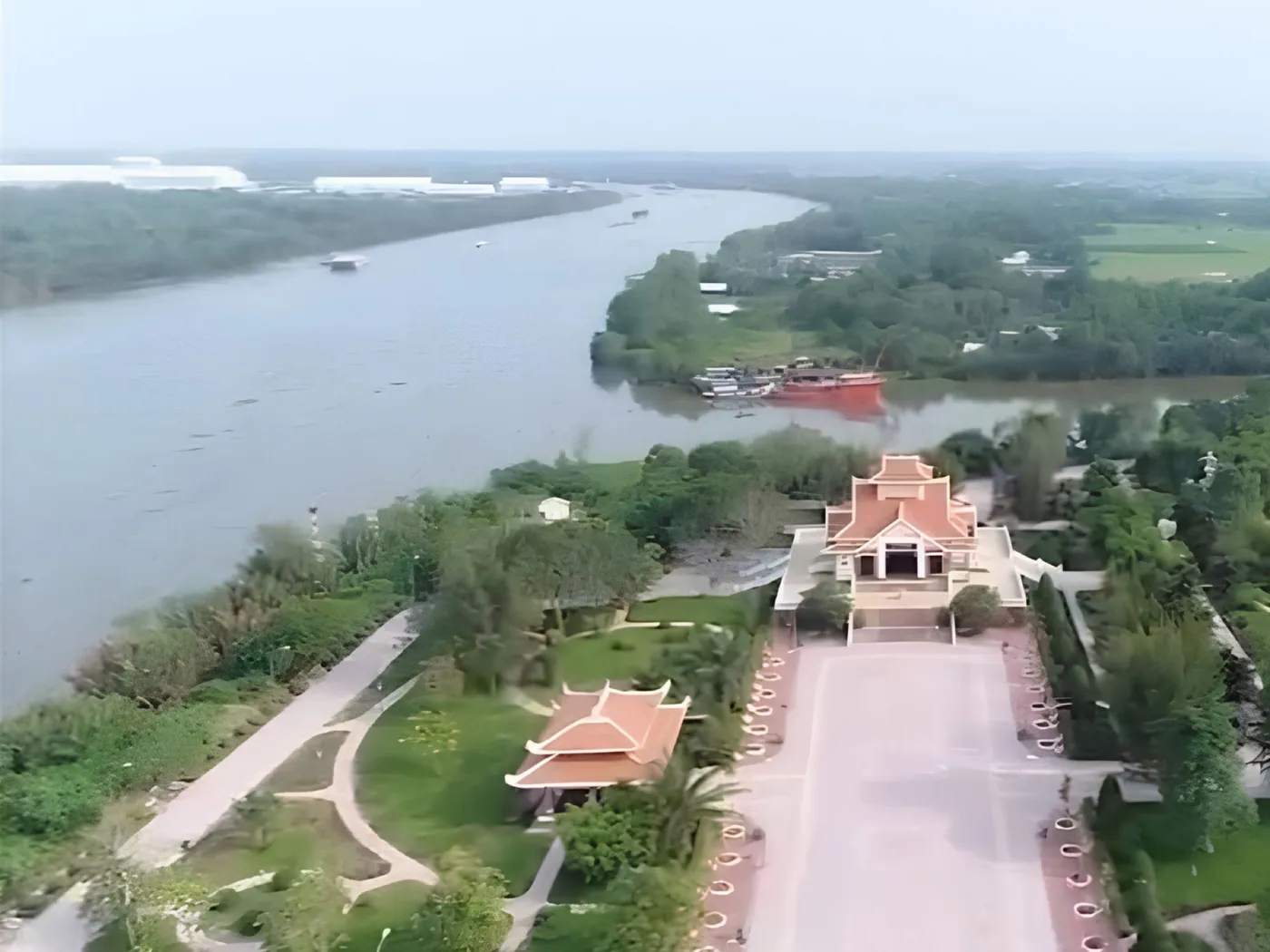
Hamlet 2 Cua CanPhu Quoc Special Zone,An Giang Province

The last stand of a national hero.

Nguyen Trung Truc Resistance Base

Begin the story
When the French have pulled up every last blade of grass in this country, only then will they have run out of Vietnamese to fight them.
— Nguyen Trung Truc, moments before his execution. Rach Gia, 27 October 1868
Begin the story

He was thirty years old. He had held a rifle for seven years. In that time he sank a French warship with a fishing boat, captured a provincial fort the French called impregnable, and surrendered himself to save his mother and an island of strangers. This is the place where it ended — and where the people of Cua Can – Phu Quoc island have remembered him ever since.

§1

The Fisherman Who Fought an Empire

Thirty years of life. Seven years at war. From a fishing village on the Vam Co River to a public execution ground in Rach Gia — these are the moments that made his name.

Nguyễn Trung Trực (pronounced roughly "ngwen chung chuck")

18381838

Long An

The mouth of the Nhat Tao River today

From a fishing hamlet to the command of an army

He was born Nguyen Van Lich in 1838, in a fishing hamlet on the lower Vam Co River in the Mekong Delta. His family had come from the central coast — refugees, pushed south a generation earlier when French ships began attacking their province. They made their living from the river, with nets.

His teacher gave him the name he is remembered by: Trung Truc — loyal and upright.

In February 1859, French forces attacked the citadel at Gia Dinh, near present-day Saigon. Nguyen Trung Truc, then twenty-one, raised a militia from his own village. Enough men followed him that within two years his band had joined the main southern resistance army, and he was given a command of his own.

24his age when he took command
186110 December 1861

The Nhat Tao River

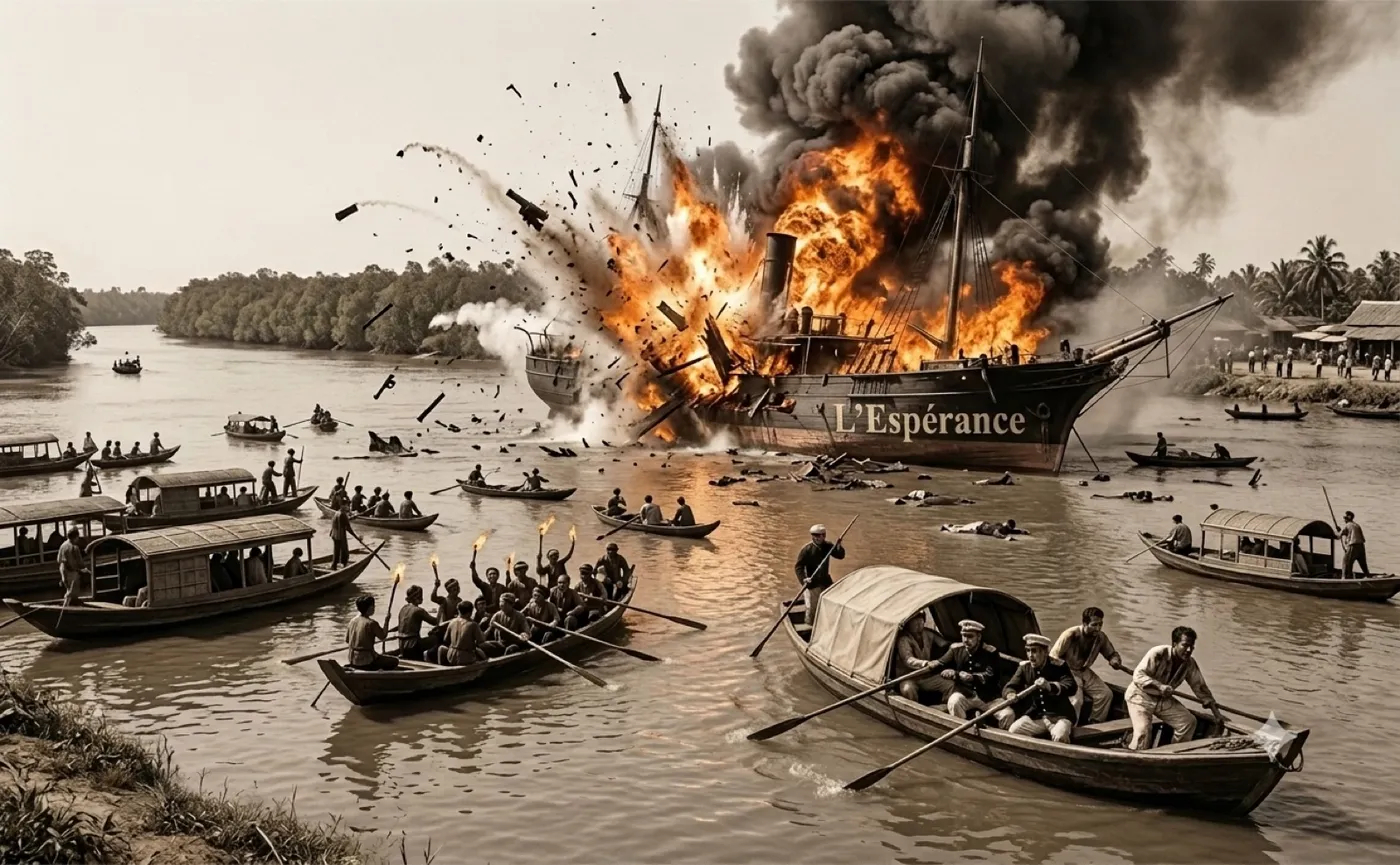
Artist's impression of the burning of the Espérance on the Nhat Tao RiverThe illustrative image for the story

The burning of the Espérance

The Espérance — "Hope" — was one of the most modern gunboats France had in Indochina: iron-reinforced, steam-driven, carrying cannon that could level a village from the water. Villagers called ships like her floating fortresses, and they were right. Nothing the resistance owned could touch one.

On the afternoon of 10 December 1861, eighty-nine men under Nguyen Trung Truc came alongside her in wooden fishing boats, disguised as a wedding party. They boarded her, fought the crew hand to hand, set her on fire, and sank her in the river.

Of the seventeen French sailors and twenty auxiliaries aboard, eight escaped. It was the first time in Indochina that a French warship had been destroyed by Vietnamese forces — and it was done by fishermen, with blades, from boats they had built themselves.

89 menagainst the most modern warship in the French Indochina squadron

Fire on the Nhat Tao struck heaven and earth— the poet Huynh Man Dat, writing in his lifetime

186816 June 1868

Rach Gia

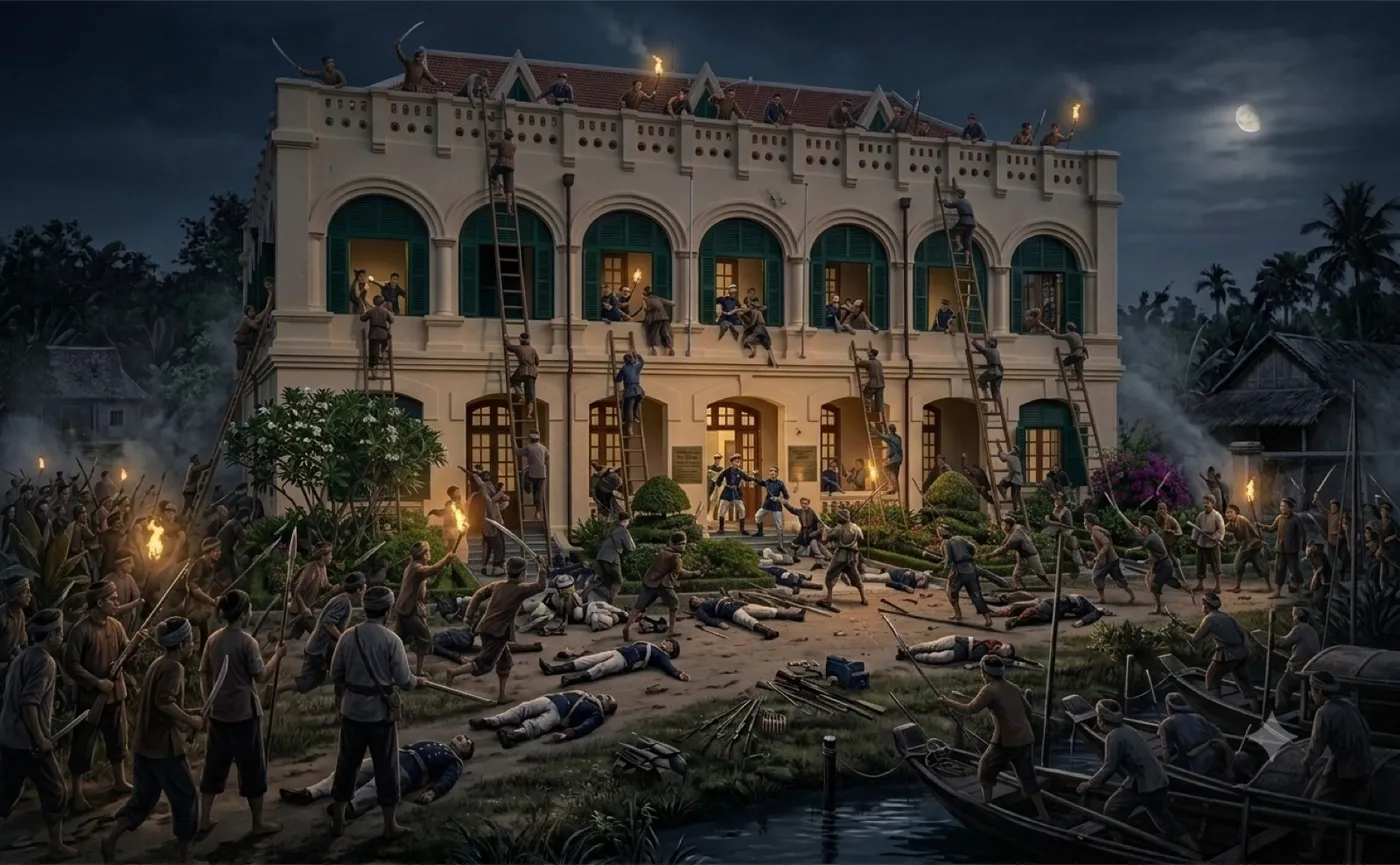
Artist's impression of the attack on the Rach Gia fort, 1868The illustrative image for the story

Taking the fort the French called impregnable

At four in the morning on 16 June 1868, Nguyen Trung Truc led his men out of a village near Rach Gia and stormed the provincial fort while its garrison slept.

By dawn the French provincial chief was dead, along with five officers and sixty-seven soldiers. The resistance took more than a hundred rifles and held the provincial capital for five days.

The French had considered the fort impossible to take. No other resistance leader in southern Vietnam captured a provincial seat — before him or after.

5 daysa provincial capital in Vietnamese hands

The sword at Kien Giang made the spirits weep— the second line of Huynh Man Dat's couplet

1868Late 1868

Cua Can, Phu Quoc

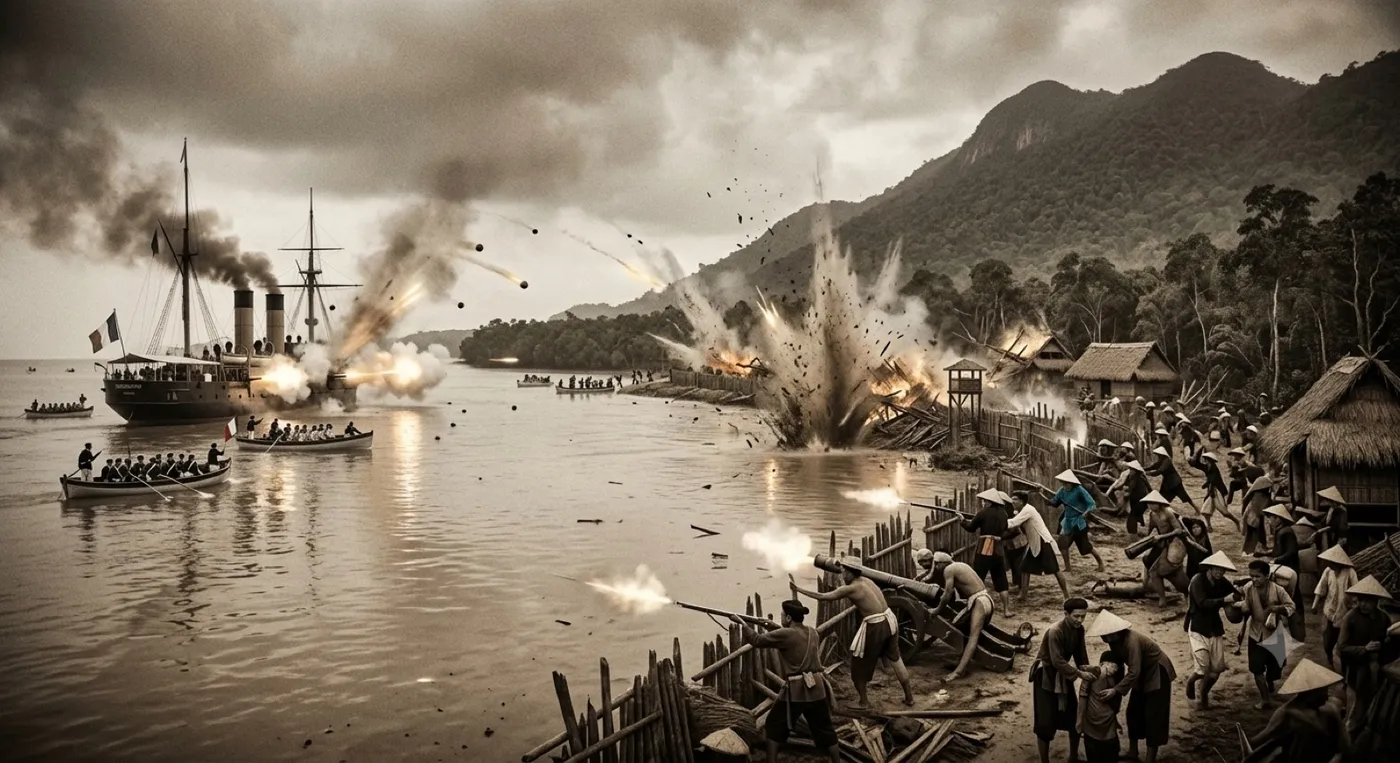
Artist's impression of the battle at the Cua Can barricadeThe illustrative image for the story

The last base — and the cost

The French retook Rach Gia within the week. Nguyen Trung Truc withdrew to the coast, then slipped across to Phu Quoc — then a forested island at the edge of the empire's reach — and made his base at Cua Can, where you are standing now.

With the islanders he felled timber and built a barricade across the mouth of the Cua Can River, closing the only navigable approach.

In early September 1868 the gunboat Groeland arrived offshore and shelled the barricade until it broke. French marines landed. What followed was two weeks of fighting the resistance could not win.

His wife, Lê Kim Định — whom his soldiers called Bà Lớn Tướng, the General's Lady — had come to the island with him. She gave birth here, fell ill, and died. Night after night he carried their newborn son through the French lines into the villages, looking for a woman who would nurse the child.

On 19 September, with his men dying and the French holding his mother hostage and killing islanders to force him out, Nguyen Trung Truc walked out of the forest and gave himself up.

186827 October 1868

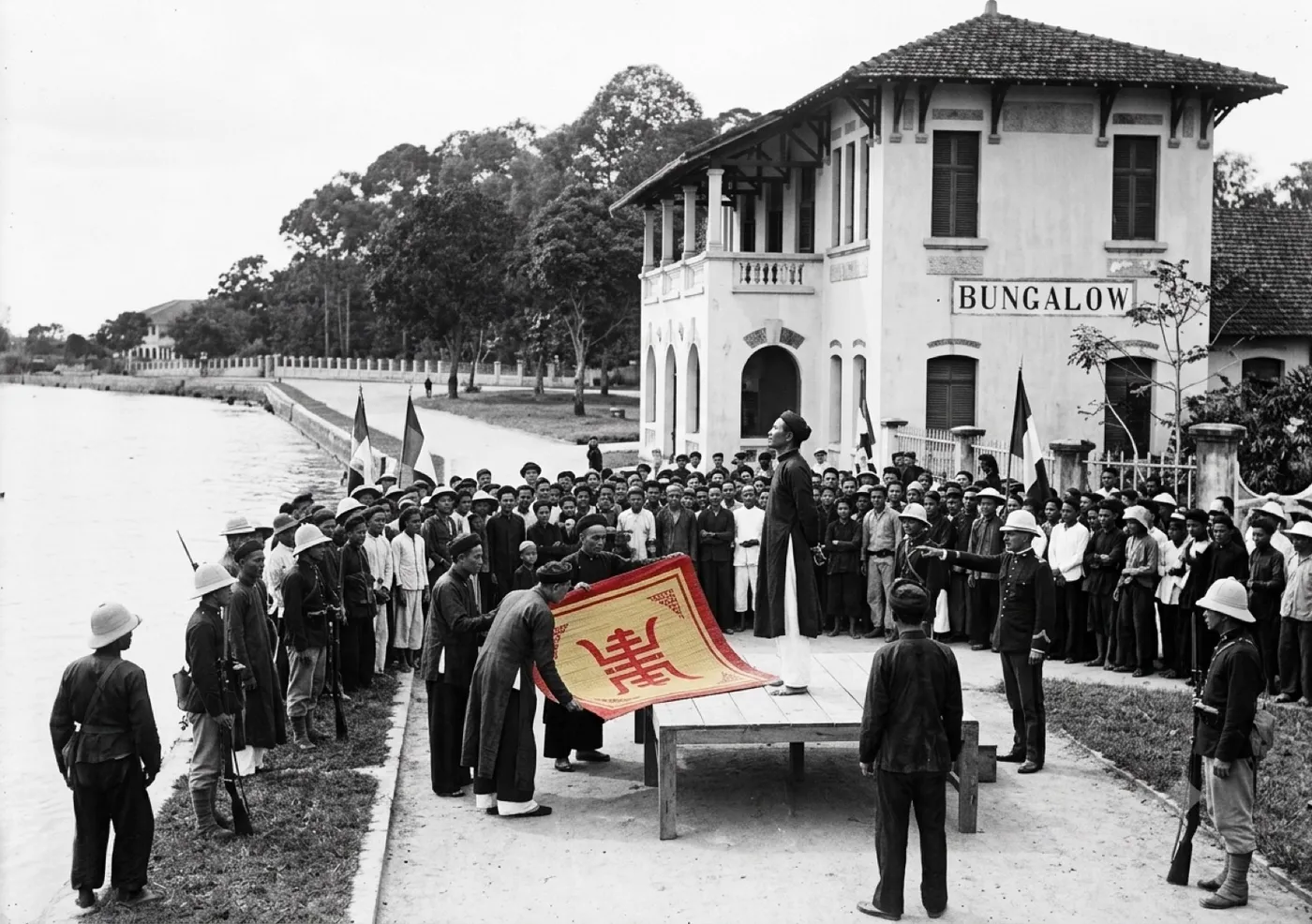
Rach Gia market

Photograph from the French colonial period in Rach Gia

The last words

He was taken to the market square at Rach Gia and executed in public, in front of the people he had fought for.

He refused the blindfold. He asked to be allowed to keep his eyes open. Then he said the sentence that every Vietnamese schoolchild still learns:

When the French have pulled up every last blade of grass in this country, only then will they have run out of Vietnamese to fight them.

He was thirty years old.

Where he and his men had sheltered, the people of Cua Can built a shrine. Where his wife was buried, they built another. In the village by the sea, they raised a temple in her name.

Three places on one island, holding three parts of a single story: a country lost, and a family with it.

The first of them is here.

§2

The Base at Cua Can

Why here

Three places in Vietnam honour Nguyen Trung Truc. Long An has the shrine where he was born. Rach Gia has the great temple where he died.

Phu Quoc has the ground he actually defended.

This stretch of Cua Can — river on one side, forest on the other — is where he brought what was left of his army after Rach Gia fell, and where the last barricade of the southern resistance was built and broken. The shrine stands on that ground. The river in front of it is the river his men blocked.

How the shrine came to be

Nobody ordered this shrine built. There was no imperial decree and no architect. It began when villagers pulled a wrecked boat out of the river.

  1. —Villagers recover the hull of a resistance boat from the Cua Can River, at the spot directly in front of where the shrine stands today. They build a small shrine to hold it.
  2. 1998The community rebuilds the shrine as a proper temple.
  3. October 2018Residents raise more than 7 billion dong — and give their own labour — to expand it into the temple you see now.

Every stage of this was paid for and built by the people who live here. It has never been a state project.

The temple built in 1998, before its renovation into the present building
The temple built in 1998, before its renovation into the present building.

The building

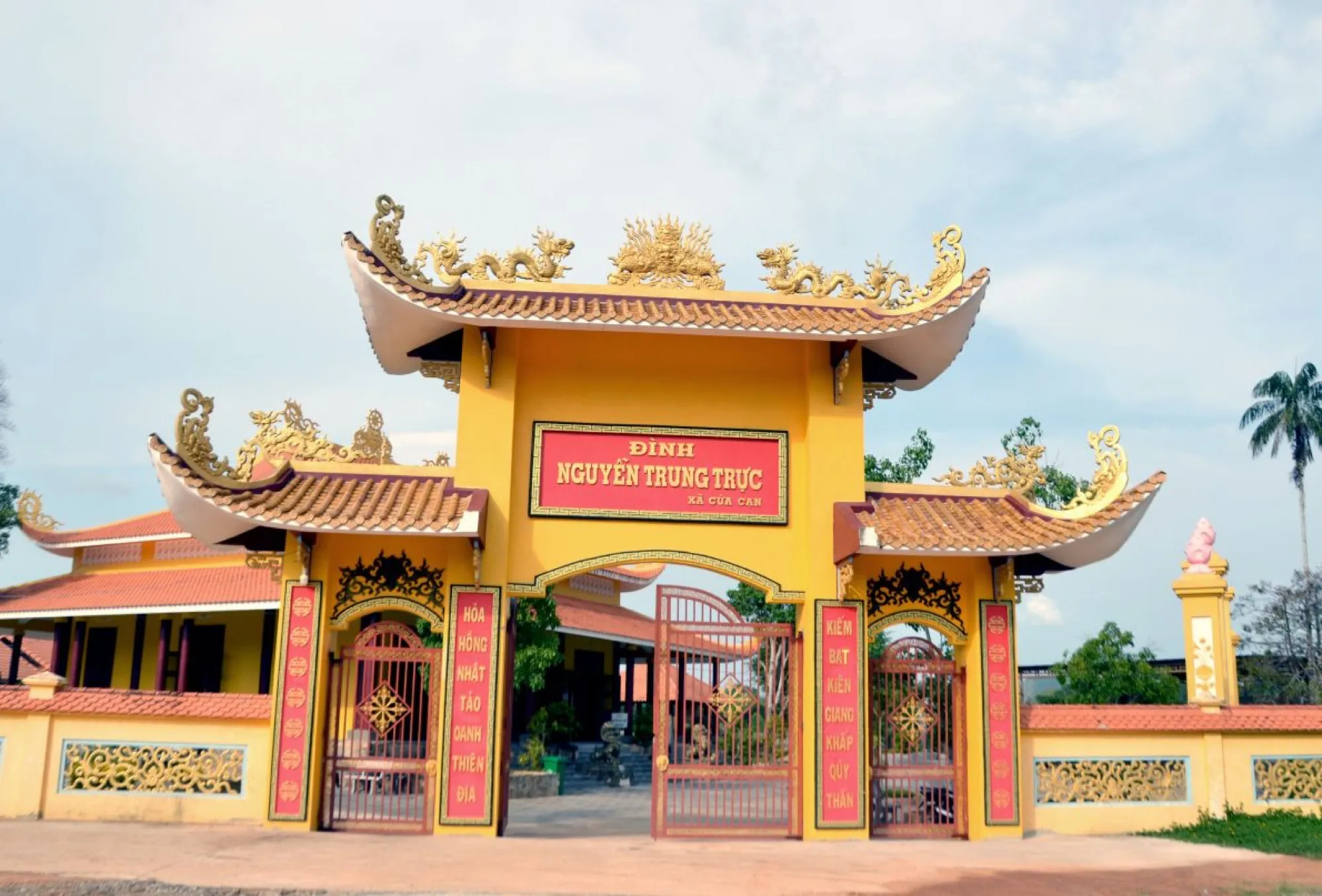
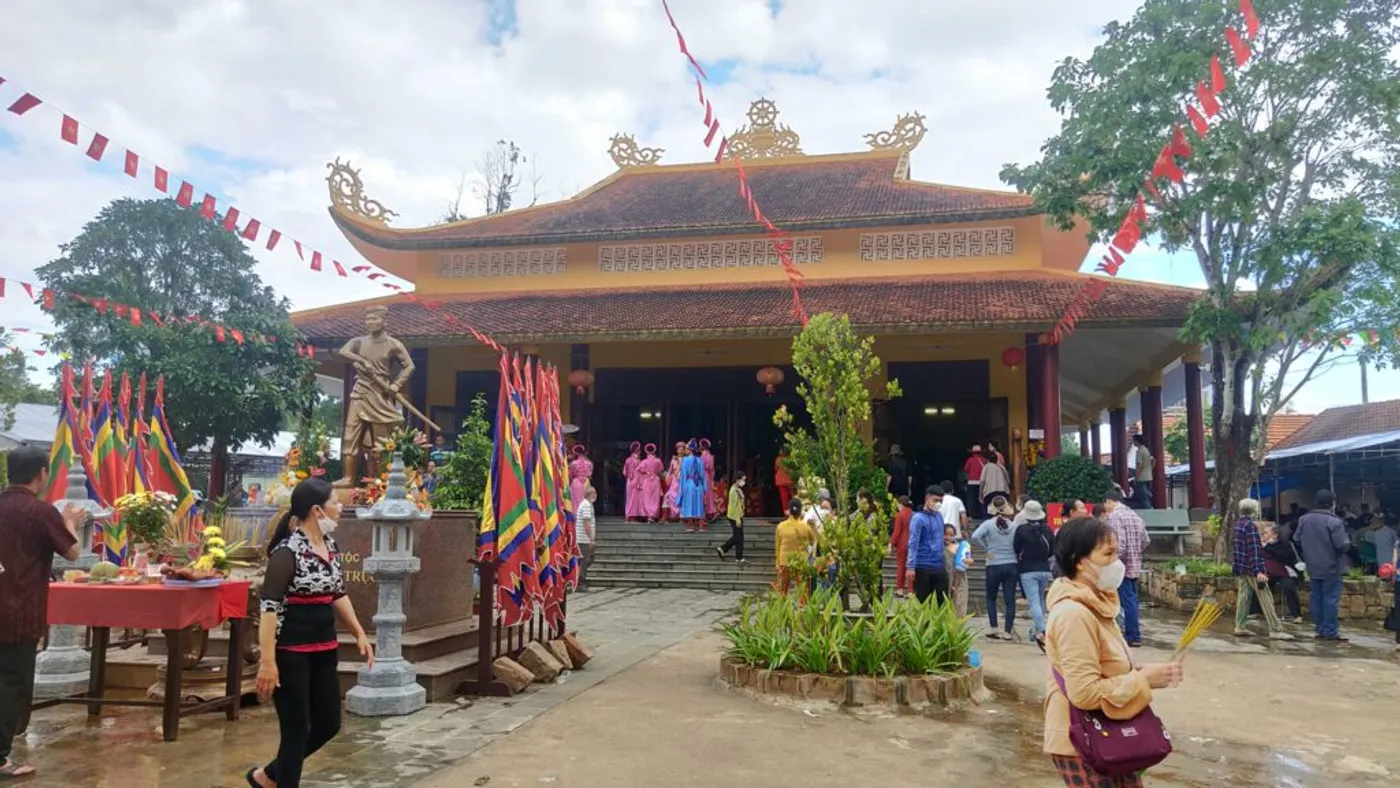
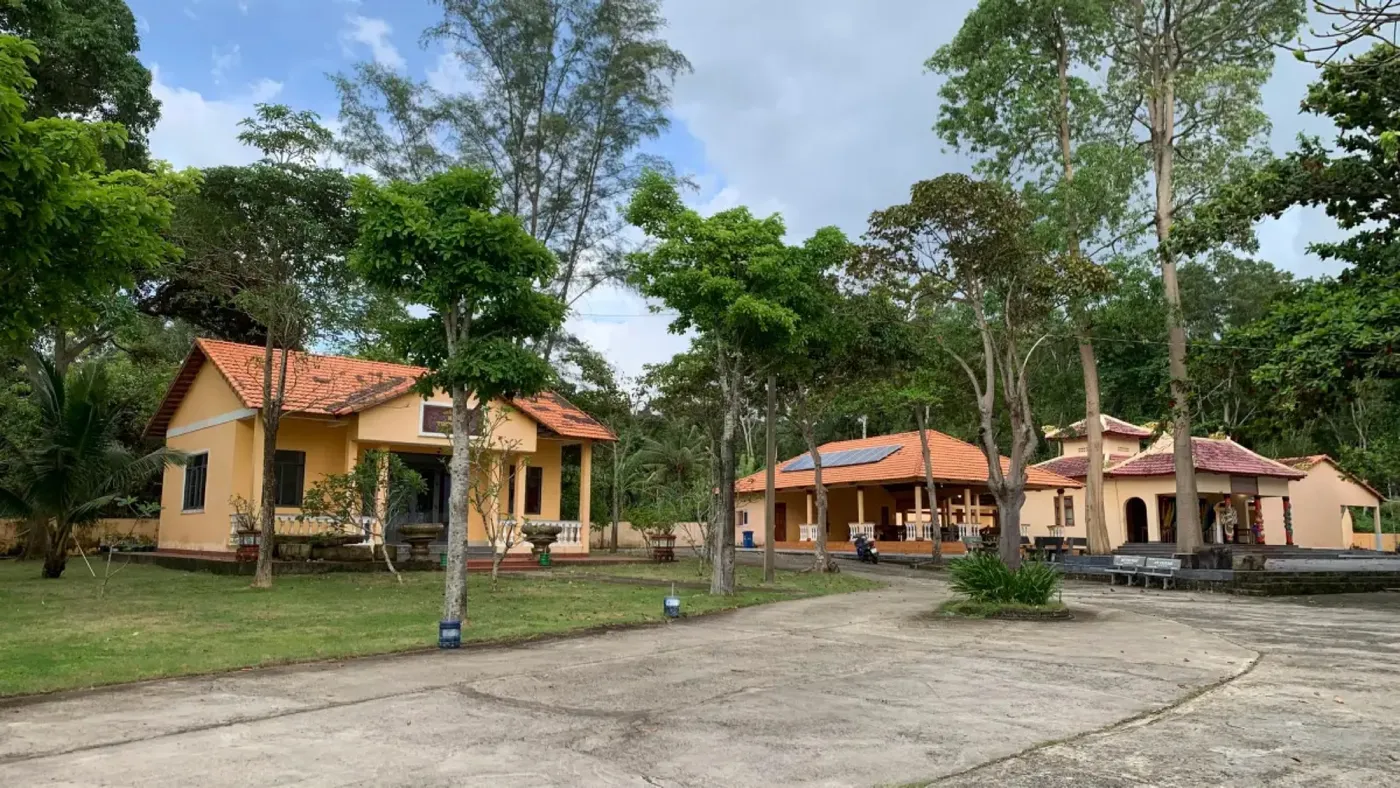
Gate of the Nguyen Trung Truc temple, Cua Can
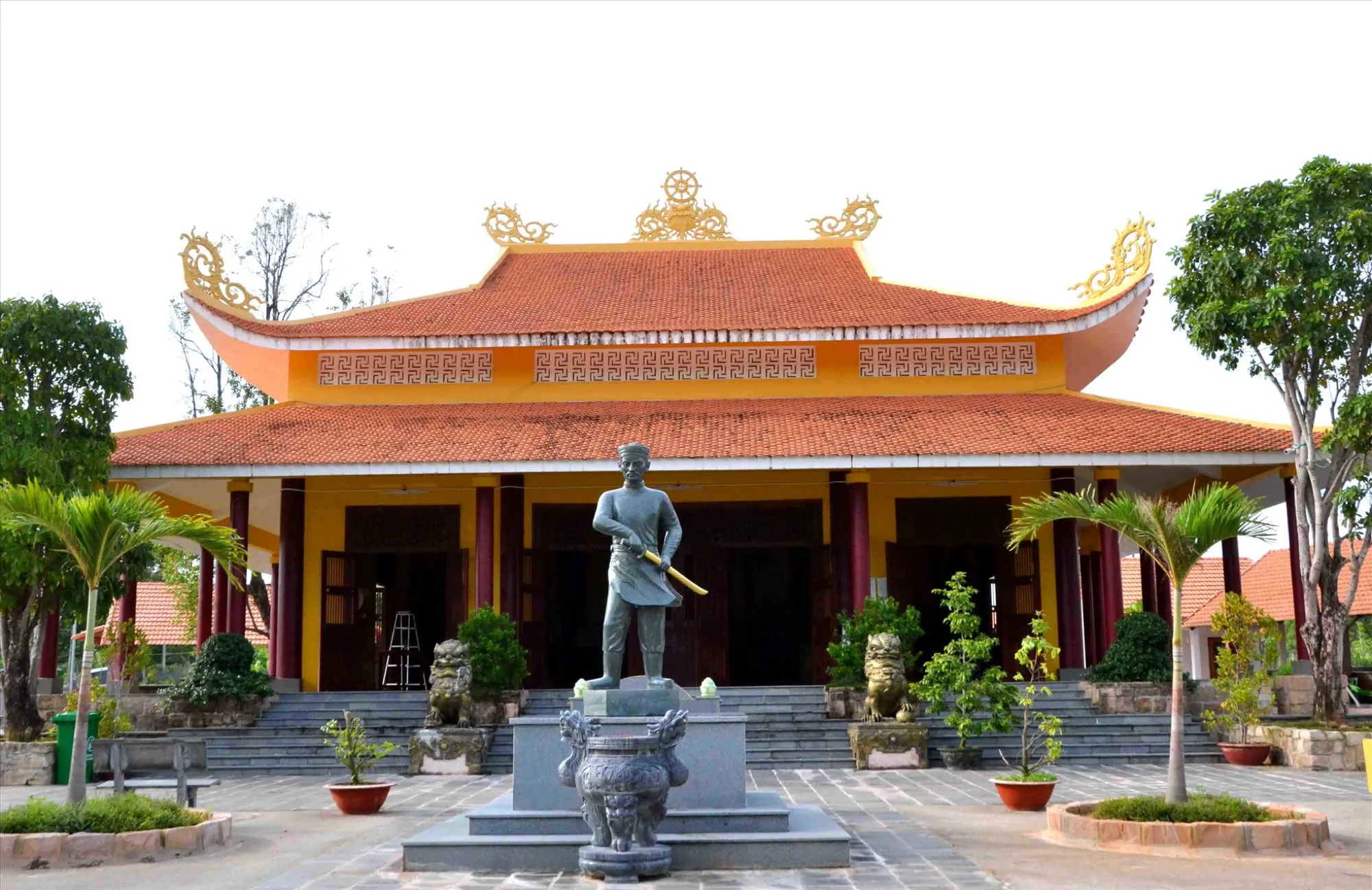
Main hall of the Nguyen Trung Truc temple at the Cua Can base
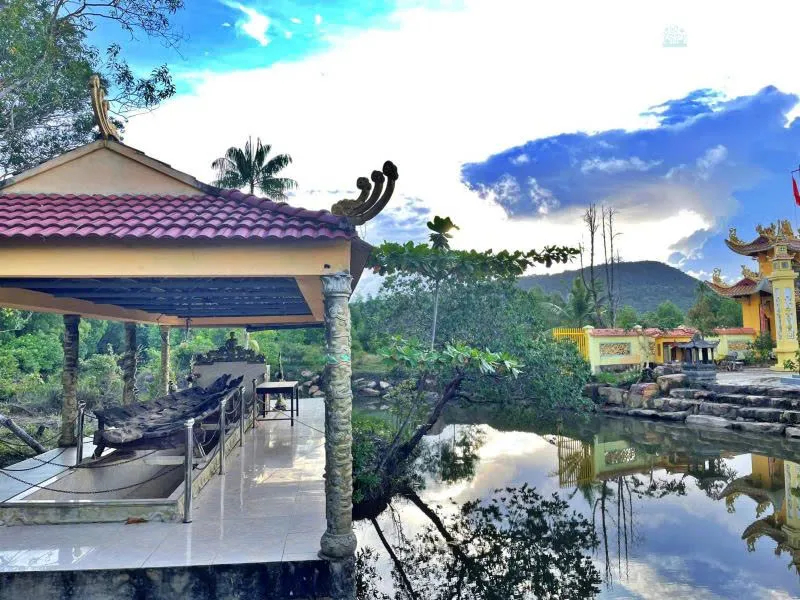
The pavilion displaying the wooden boat beside the pond, with the main hall behind
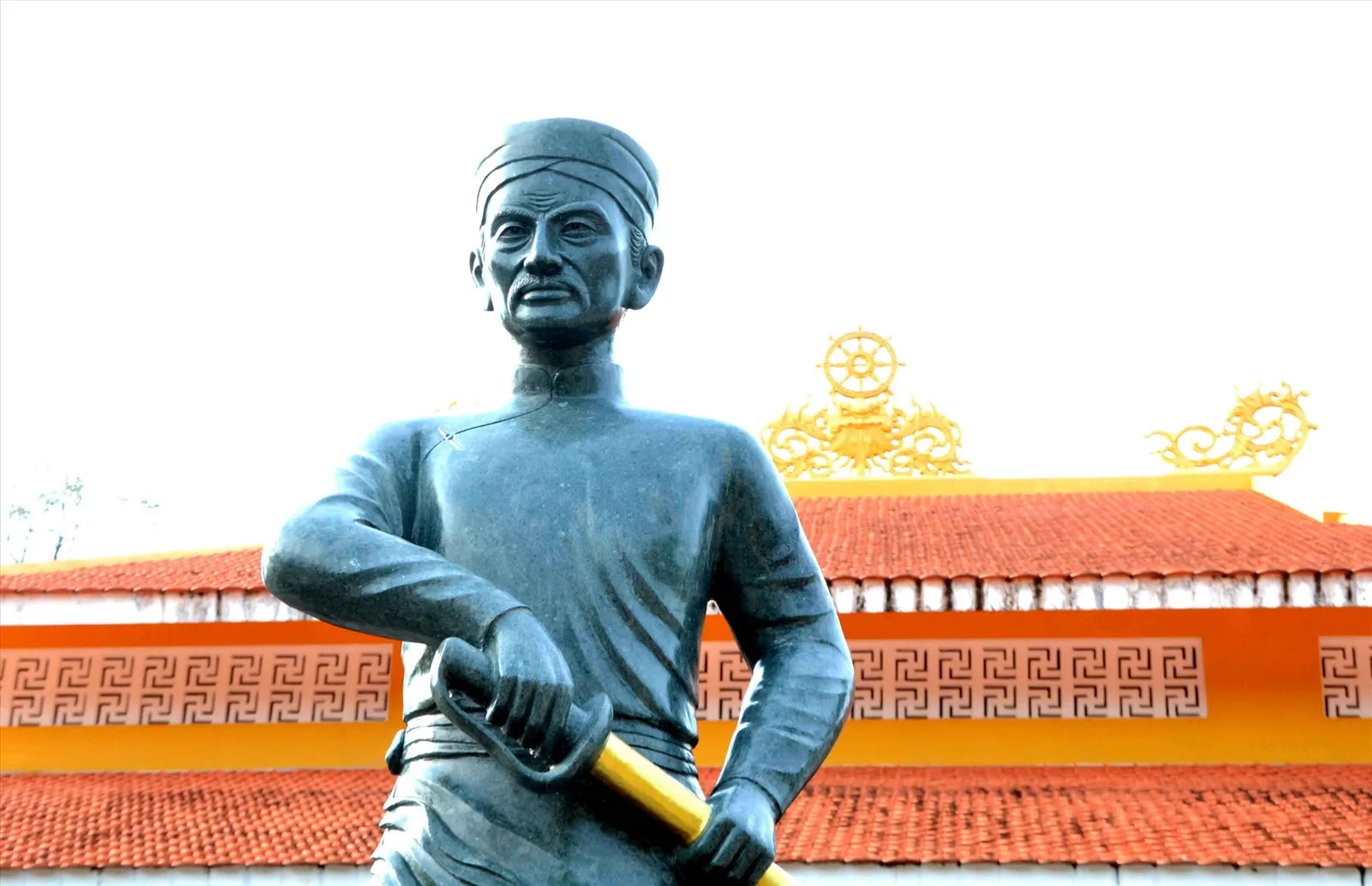
Statue of Nguyen Trung Truc in front of the main hall roof
§3

What Survives

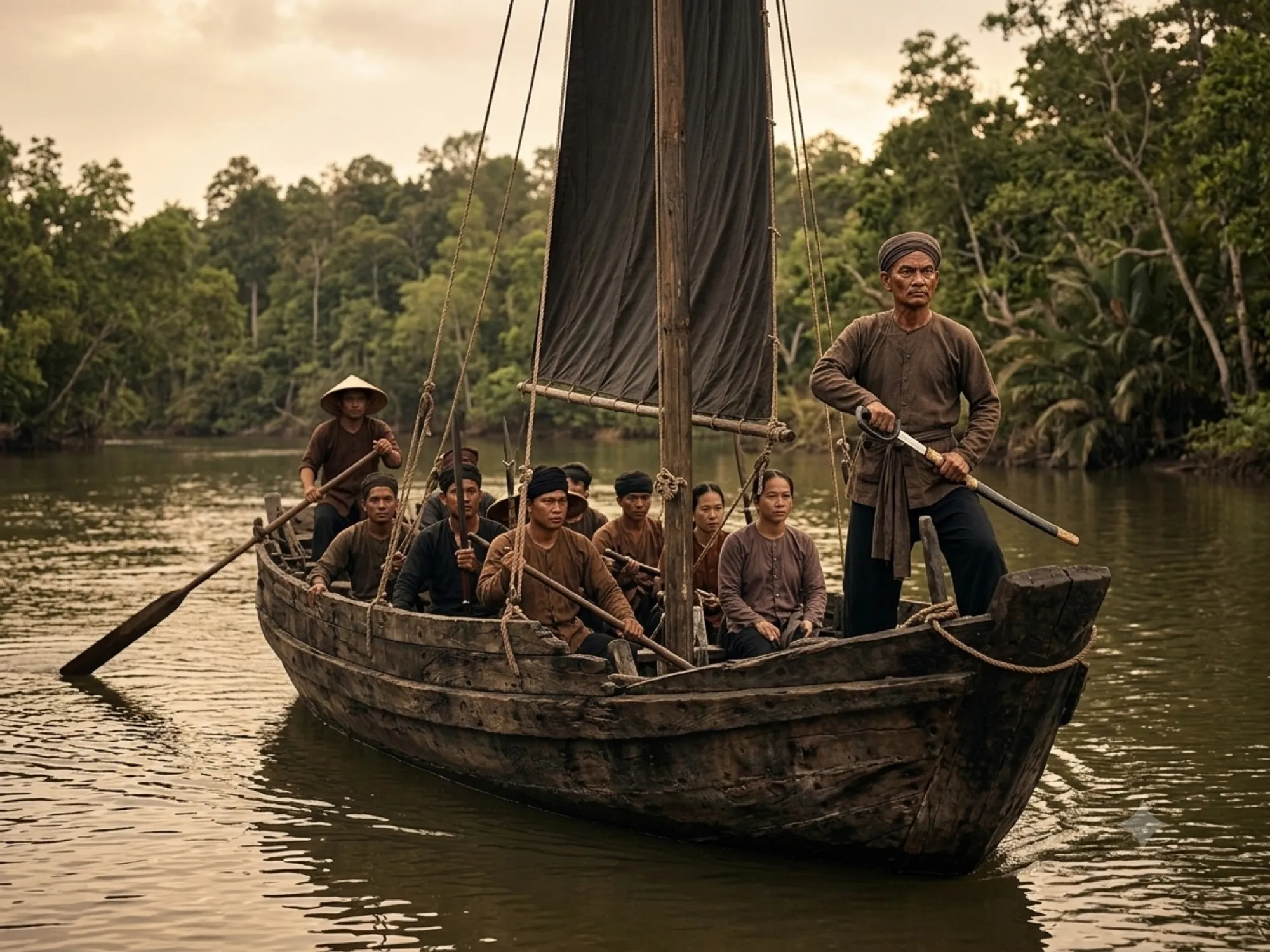
Artist's impression of the resistance boat on the riverThe illustrative image for the story
The boat

What the river gave back

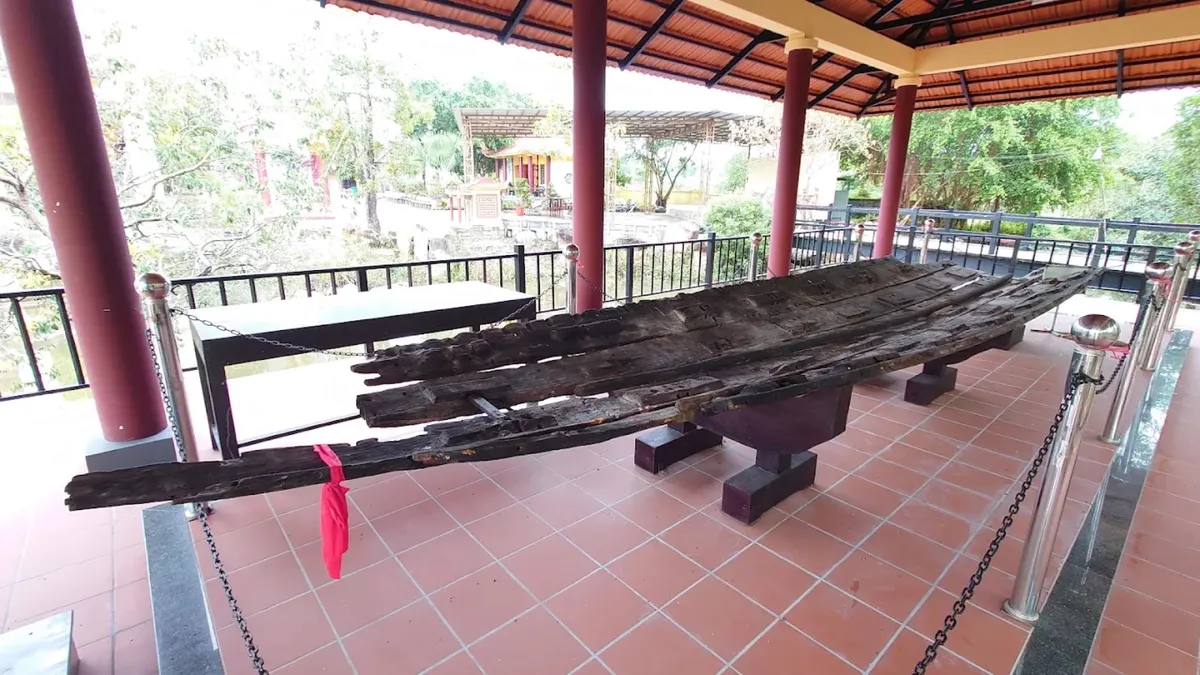
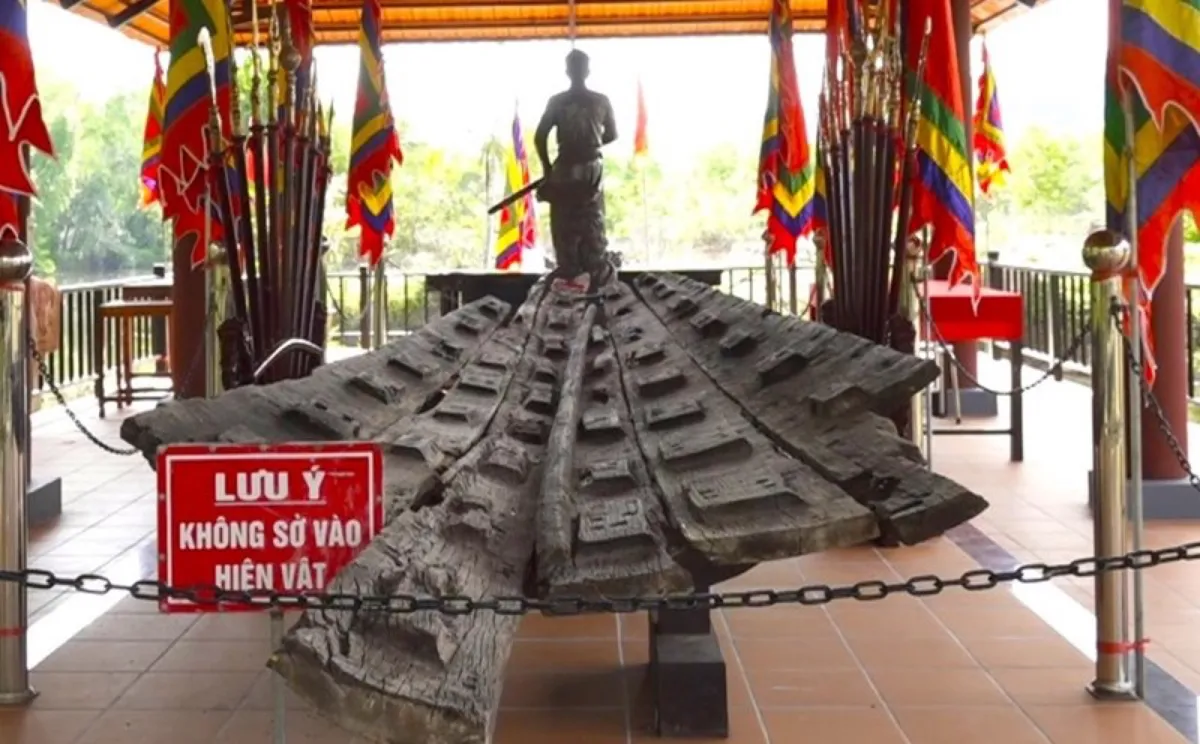
The most important object in this temple is a piece of a wooden boat.

Villagers pulled it out of the Cua Can River, from the water directly in front of where you are standing. It is what remains of the resistance fleet — the small wooden craft that carried Nguyen Trung Truc's men to this island, and that were sunk or burned when the French gunboat came.

The shrine exists because of this boat. The villagers who recovered it built the first altar to keep it somewhere it would be honoured rather than sold for firewood. Everything else here — the temple, the festival, the hundred and fifty years of remembering — grew outward from a hull in the mud.

The bow of the wooden boat, on display at the temple
The remains of the wooden boat on display at the temple
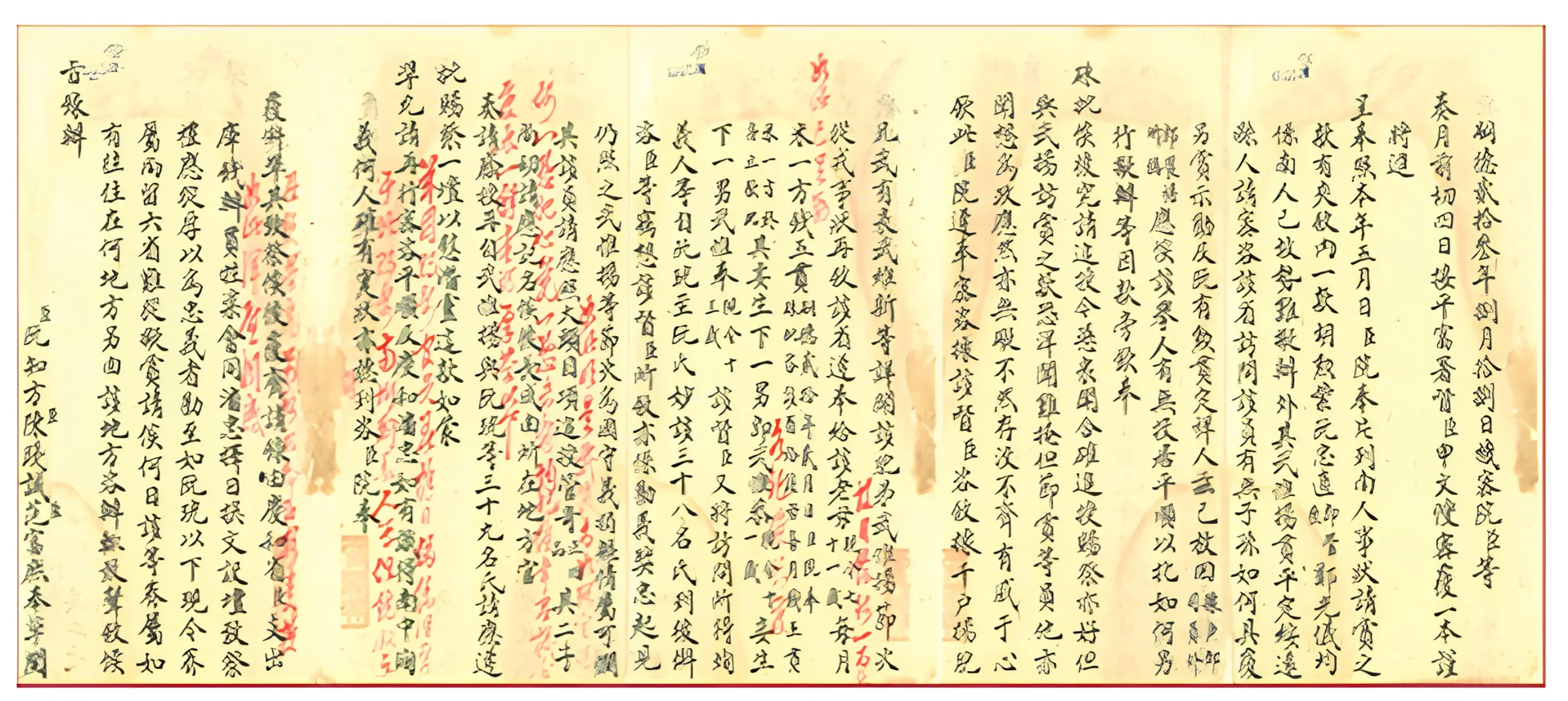
Imperial record from the reign of Tu Duc acknowledging the service of Nguyen Trung Truc
The imperial record

Recognition from Hue, two years too late

In 1870, the Privy Council in Hue submitted a memorial to Emperor Tu Duc listing the southerners who had fought the French, and what each should be posthumously awarded. Nguyen Trung Truc's name is on it.

The court that had signed away the six provinces was, two years after his execution, formally recording what he had done for them.

The original is held in Vietnam's National Archives. A translation is displayed in the temple.

§4

The Memorial Festival

This year's memorial

7–8 October 2026

27–28th day of the 8th lunar month

5days away

What the festival is

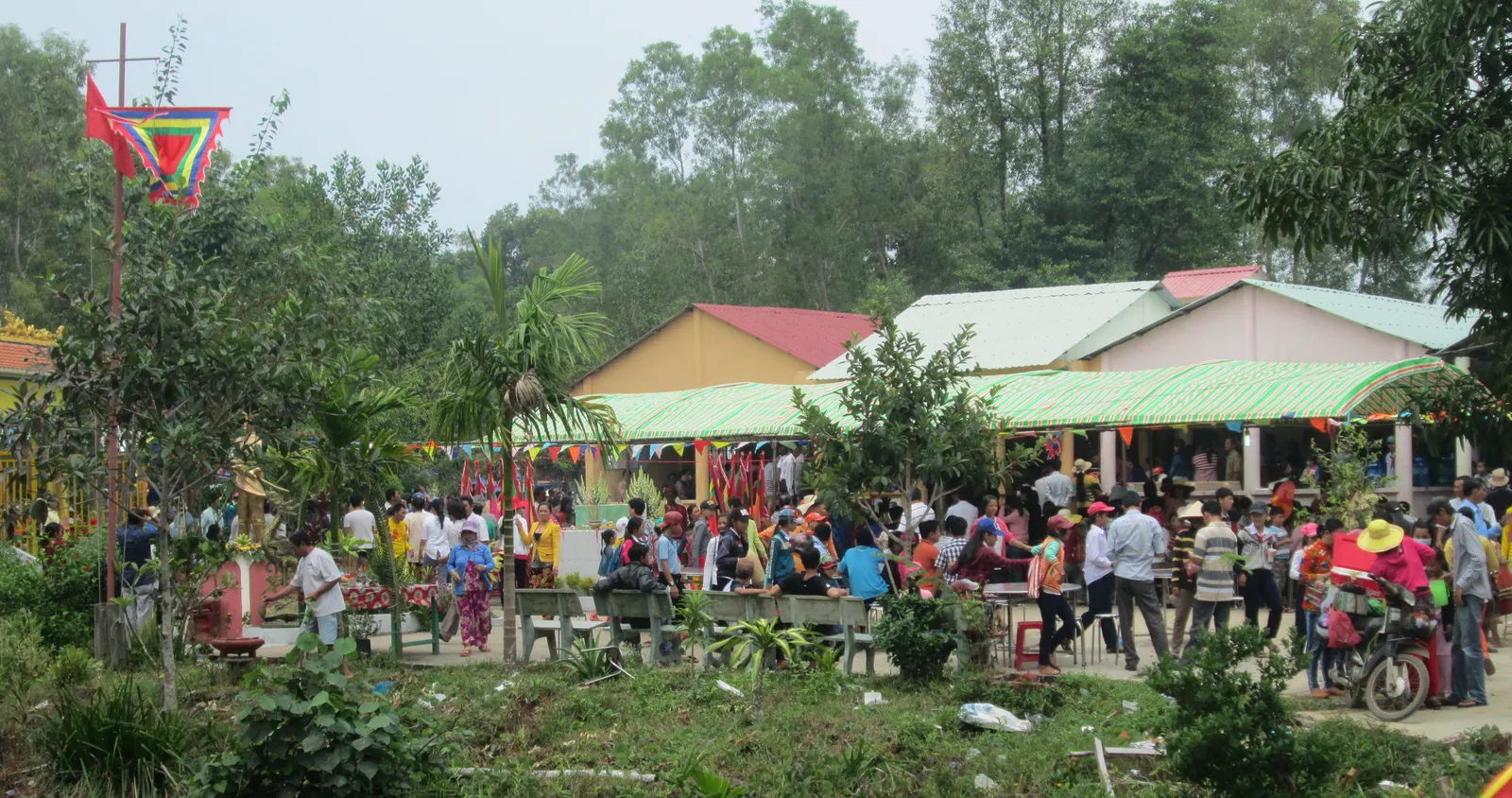
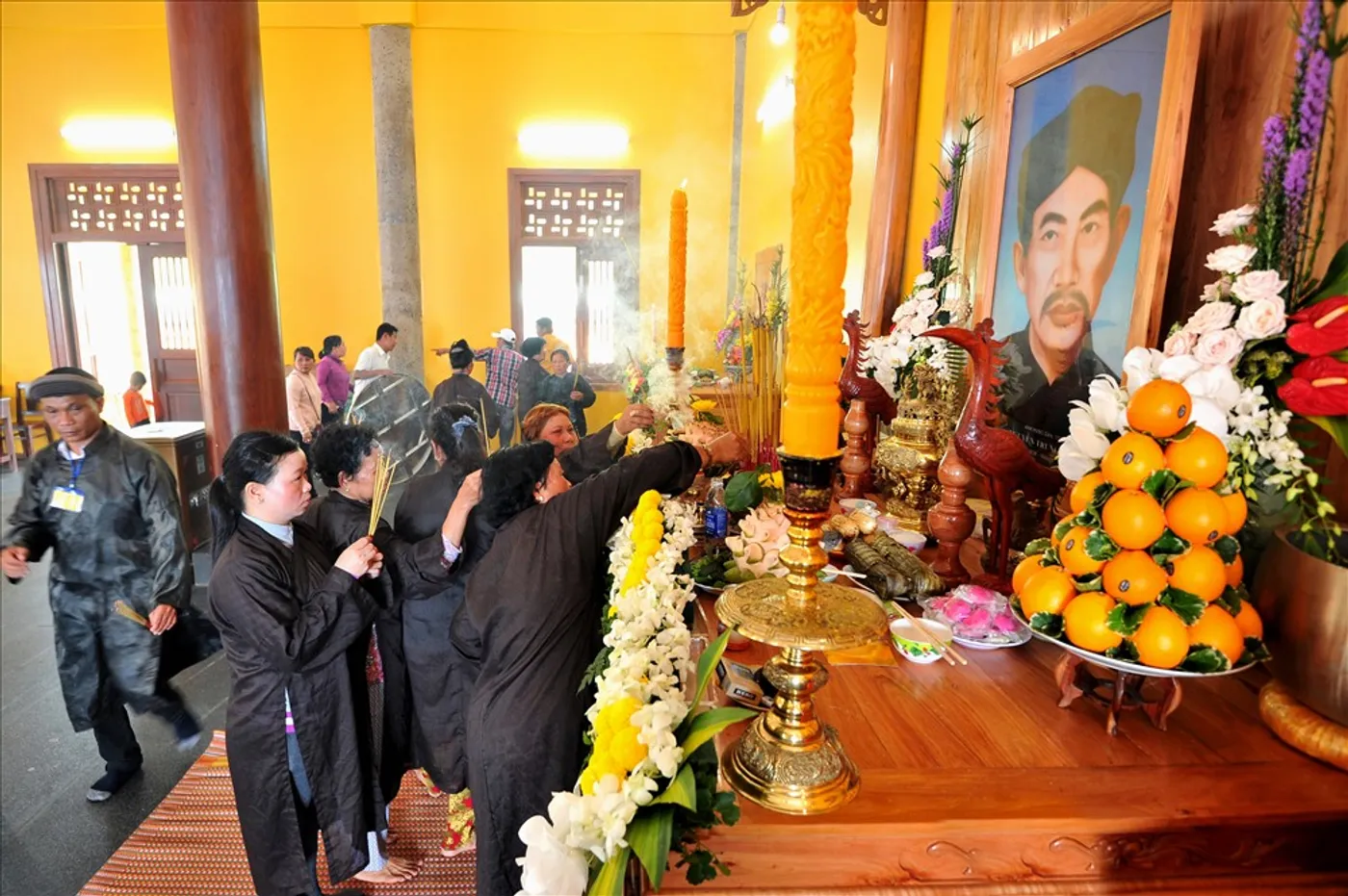
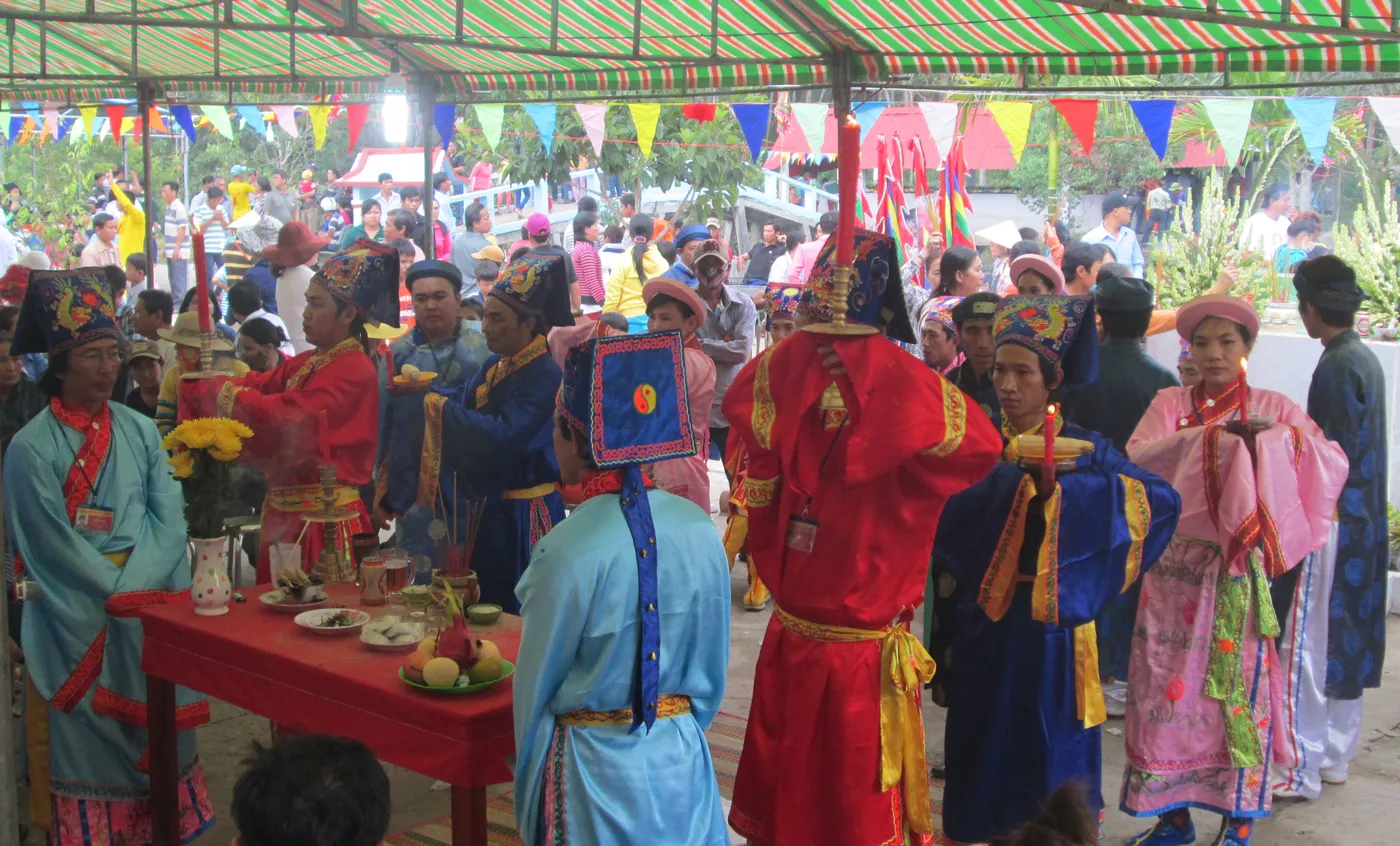
Every year, on the 27th and 28th days of the eighth lunar month, people come to the shrine from across Phu Quoc and from the mainland.

They do not come to ask for anything. There is no fortune-telling here, no offerings bought at a stall, no fee. They come to light incense for a man who died a hundred and fifty-eight years ago, and to eat a vegetarian meal cooked by their neighbours.

If you are on the island during these two days, you are welcome. Nobody will ask you for money, and nobody will expect you to know what to do.

What happens, hour by hour

Morning
Incense offered at the main altar
Midday
The formal rite
Throughout
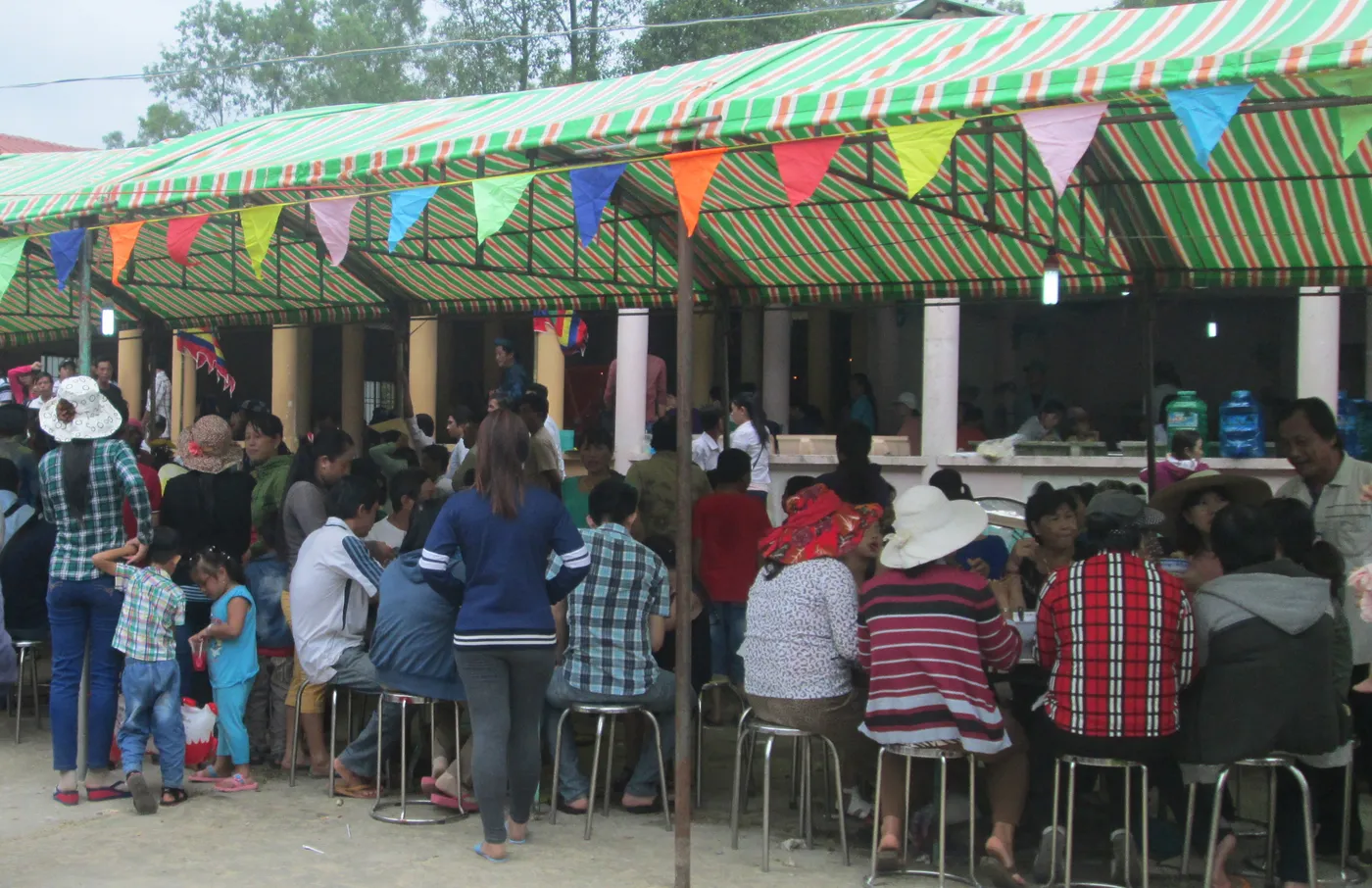
The communal kitchen: free vegetarian food, cooked and served by villagers, for anyone who comes

The kitchen

Nobody sells anything at this festival. For two days the villagers of Cua Can cook — rice, noodles, sticky-rice cakes, all vegetarian — and feed everyone who walks in. They bring the rice themselves. They take turns at the pots through the night.

It is not hospitality laid on for visitors. It is what the community does for the man it is remembering, and you are simply included in it.

§5

Plan Your Visit

It takes forty minutes. Give it half a day.

The shrine itself is small and you will see it in half an hour. But it sits in the part of Phu Quoc the resorts have not reached — a river, a forest, a fishing village, an empty beach — and the afternoon around it is the reason to come.

Address

Hamlet 2 Cua Can, Phu Quoc Special Zone, An Giang Province

10.30925° N, 103.93561° E

Get directions

Open

8:00 – 18:00, every day

Admission
Free
Time needed
30–40 minutes at the shrine

Getting there

  • By motorbike

    The usual way. From Duong Dong, head north toward Ganh Dau on road DT45. At the Cua Can crossroads turn right toward Cau Trang bridge; the temple gate is about 3 km further on. Roughly 25 minutes from town.

  • By Grab or Xanh SM

    Book to the address. Most drivers on the island know it.

Visiting respectfully

This is a shrine, not a museum. A few things worth knowing before you walk in:

  • Dress

    Cover shoulders and knees. Beachwear is the one thing that will make people uncomfortable.

  • Offerings

    Not expected. If you would like to, incense and fruit are the right things, and someone will show you where.

  • Photography

    Welcome in general. Ask the caretaker before photographing the boat up close, or any ceremony in progress.

  • Donations

    There is a box in the main hall for the temple's upkeep. Entirely optional; nobody will approach you about it.

Around Cua Can

Within 5–10 km of the shrine:

  • The Cua Can River

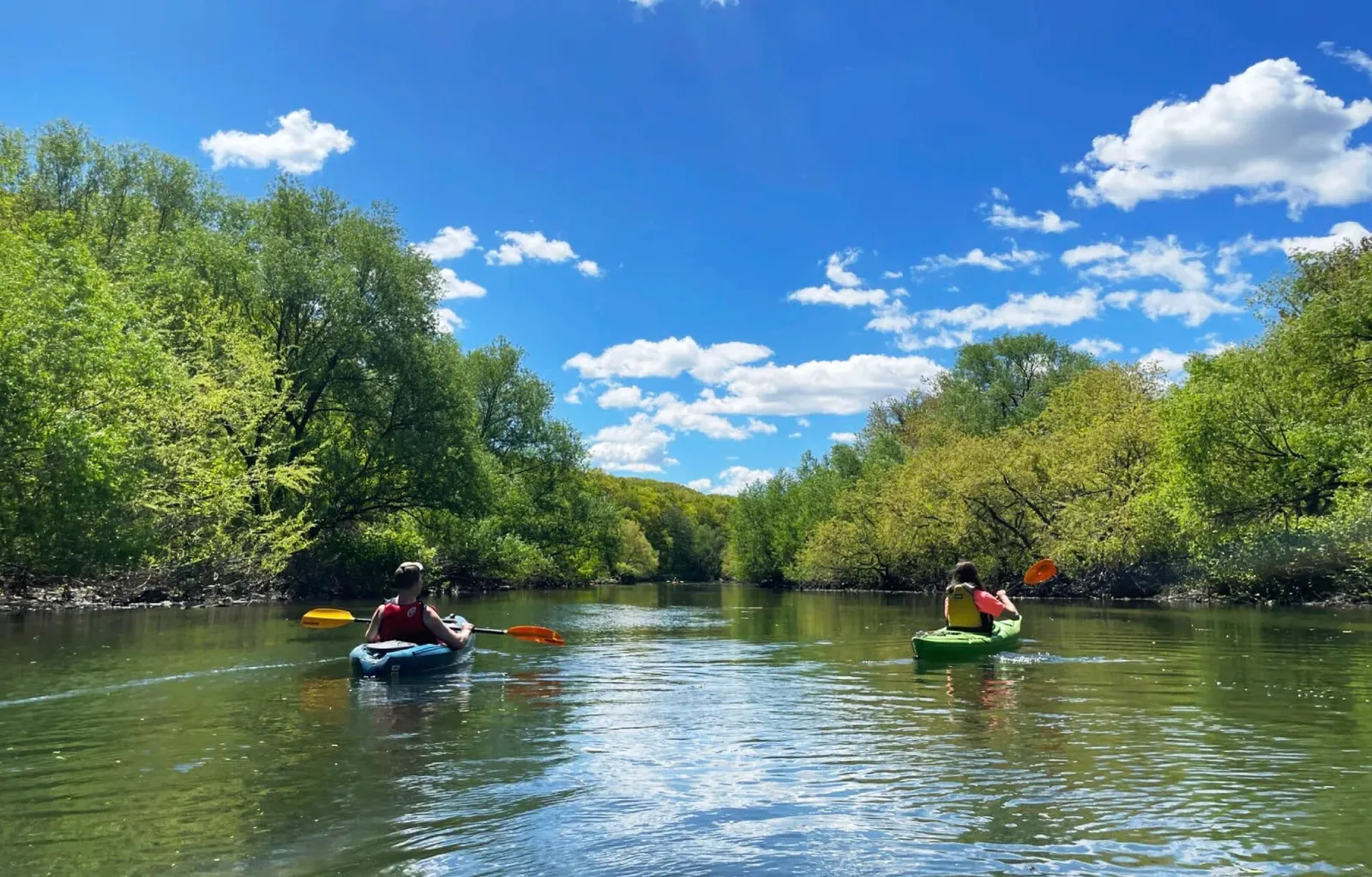
    Kayak, SUP or a traditional basket boat upriver through the mangroves. The same river his men barricaded.

  • Bai Ong Lang

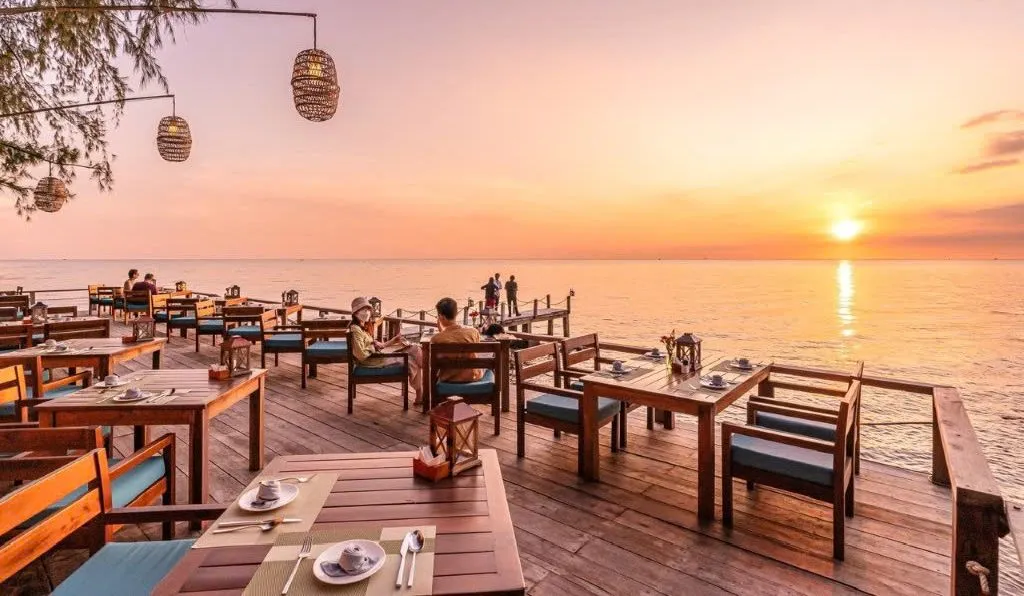
    A longer stretch of sand, good at sunset.

  • Dinh Ba Ong Lang

    The temple to his wife.

    Chapter Two, coming Q1 2027
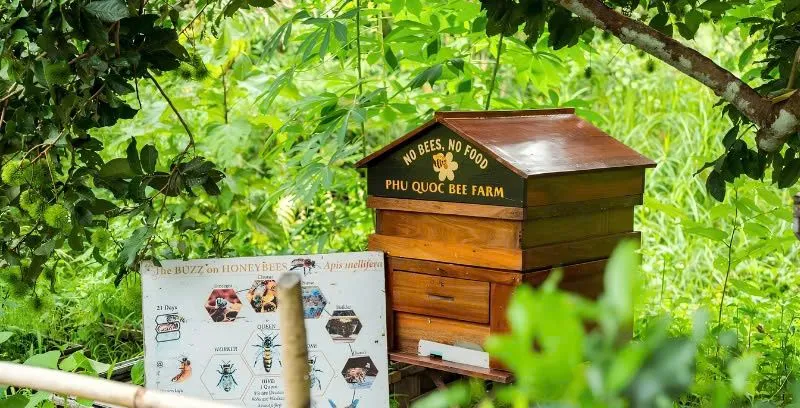
  • Pepper farms and bee farm

    Working smallholdings you can visit in the surrounding lanes.

  • Bai Cua Can

    The nearest beach, 4 km.

A day in Cua Can

  1. MorningThe shrine. 45–60 minutes.
  2. MiddayLunch in the village, then kayak or basket boat on the river.
  3. Late afternoonBai Cua Can or Bai Ong Lang for sunset.
The family trail

Three places, one family, one island

No other place in Vietnam can show you this. Long An has where he was born; Rach Gia has where he died. Only Phu Quoc holds what happened to his family while he was losing the war.

  1. Nguyen Trung Truc Resistance Base

    Hamlet 2 Cua Can

    Light incense in the main hall, then see the boat.

  2. The Grave of Ba Lon Tuong

    Chapter Three, Q2 2027

    Dong Cay Sao, Cua Can

    Where his wife is buried. A small shrine right on the shore — one of the best sunsets on the island.

  3. Dinh Ba Ong Lang

    Chapter Two, Q1 2027

    Ong Lang, Cua Duong

    The temple raised in her name, with its own memorial days each lunar January.

All three fit comfortably into one day.

§6

About This Project

Mission

Chapter One

The Nguyen Trung Truc Resistance Base at Cua Can is the first site in Phu Quoc Gateway's heritage digitisation project.

Phu Quoc is changing faster than almost anywhere in Vietnam. Most of what is written about this island is written for people selling it. We are recording what the island's own communities have been keeping — their shrines, their stories, their festivals — in their own words, while the people who remember are still here to tell us.

Bring locals to global.

The Nguyen Trung Truc family heritage of Phu Quoc

  1. Chapter OneNguyen Trung Truc Resistance Base, Cua Canpublished 8 October 2026
  2. Chapter TwoDinh Ba Ong Lang, Cua DuongQ1 2027, to launch at the lunar January memorial
  3. Chapter ThreeThe Grave of Ba Lon Tuong, Dong Cay SaoQ2 2027

Credits

  • Management Board, Nguyen Trung Truc Resistance Base, Cua Can
  • Phu Quoc Gateway Co., Ltd
  • Sources: local heritage records; Nguyen dynasty court documents held at National Archives Centre I; interviews with the Cua Can community.